

Sinoright Blog
Application Fields of Sodium Thiocyanate
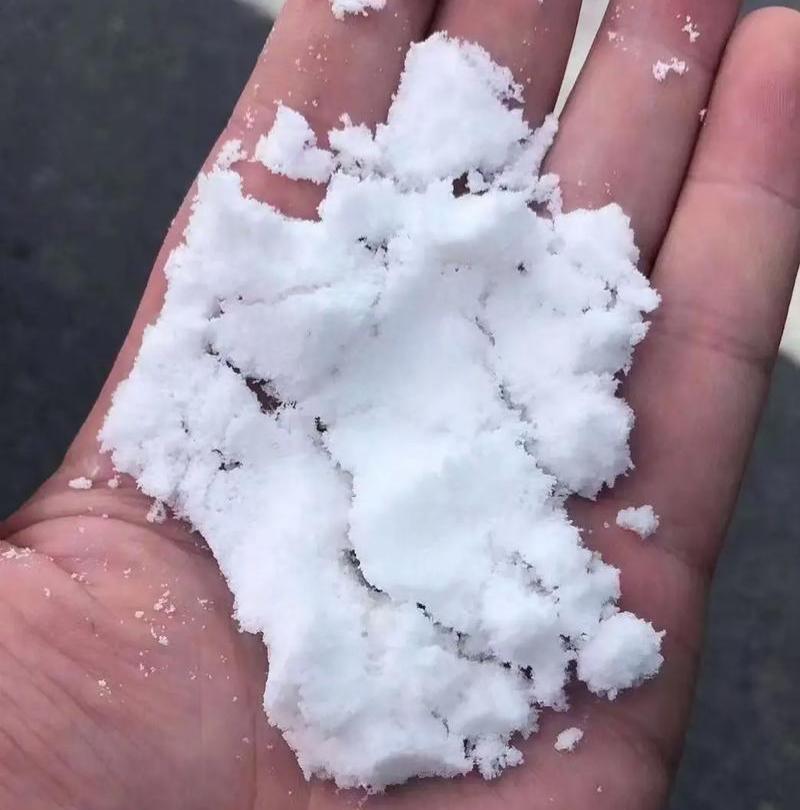
Sodium Thiocyanate (NaSCN) is an important inorganic chemical intermediate. It appears as white crystalline powder or granules at room temperature, with good water solubility and chemical stability. The strong coordination ability of its thiocyanate ion (SCN⁻) enables it to play an irreplaceable role in many industrial fields. With excellent physical and chemical properties, sodium thiocyanate is widely used in core industries such as chemical fiber, mineral processing, medicine, chemical industry and environmental protection, adapting to high-end needs in different scenarios and helping the upgrading and technological innovation of downstream industries. The following is a detailed analysis of its main application fields to show its diverse value and broad prospects.
Chemical Fiber Industry: Core Solvent for Acrylic Fiber Production
In the chemical fiber industry, sodium thiocyanate is a key solvent for the wet spinning process of polyacrylonitrile (PAN) fiber (i.e., acrylic fiber), which is also one of its main application fields. Its aqueous solution can efficiently dissolve PAN resin to form a uniform and stable spinning dope, ensuring that the spun acrylic fiber has excellent strength, elasticity and uniformity, and improving the quality and processing performance of the finished fiber. According to industry data, the domestic acrylic fiber output in 2024 was about 680,000 tons, of which about 75% adopted the sodium thiocyanate solvent method, corresponding to an annual consumption of sodium thiocyanate exceeding 120,000 tons, accounting for more than 60% of the national total consumption. In addition, sodium thiocyanate can also be used in fabric dyeing processes as an auxiliary agent for vat dyes, improving dyeing uniformity and color fastness, and helping to upgrade the quality of textile products.

Mineral Processing: High-Efficiency Inhibitor for Non-Ferrous Metal Separation
As a high-quality flotation inhibitor in the mineral processing industry, sodium thiocyanate is widely used in the separation and purification of non-ferrous metal ores such as copper, lead and zinc. With its complexation characteristics with metal ions on the mineral surface, sodium thiocyanate can effectively inhibit the flotation activity of non-target minerals, improve the flotation efficiency and concentrate grade of target minerals, reduce mineral processing costs, and enhance resource utilization. According to relevant data from the Ministry of Natural Resources, the annual consumption of sodium thiocyanate in non-ferrous metal mineral processing in China is about 23,000 tons, and with the increasing demand for low-grade ore processing, the dosage in this field is showing a steady growth trend. At the same time, it also plays an important role in the extraction of precious metals, which can be used for the selective separation of precious metals such as gold and palladium, helping the efficient recovery of precious metal resources.
Pharmaceutical Industry: Key Raw Material for Pharmaceutical Intermediates
In the pharmaceutical industry, sodium thiocyanate is a core raw material for the synthesis of various sulfur-containing pharmaceutical intermediates, especially playing a key role in the synthesis of thiocyanate compounds, providing support for the research and development and production of various drugs such as antibiotics, antihypertensive drugs and antithyroid drugs. Although it was once directly used in the treatment of hypertension and hyperthyroidism, due to its potential toxicity, its clinical application has been greatly reduced, focusing on the synthesis of pharmaceutical intermediates. In addition, sodium thiocyanate can also be used for the crystallization and purification of proteins. With its characteristics of lowering the melting point of proteins and enhancing solubility, it helps technological breakthroughs in the field of biopharmaceuticals and provides convenience for drug research and development.
Chemical and Analytical Fields: Multifunctional Auxiliaries and Reagents
In the field of basic chemical industry, sodium thiocyanate has a wide range of application scenarios. As an important auxiliary agent for organic synthesis, it can be used to convert alkyl halides into corresponding thiocyanates, and can also react with amines to generate thiourea derivatives, providing a basis for the synthesis of fine chemical products. In the electroplating industry, sodium thiocyanate can be used as an additive in processes such as cyanide copper plating and cyanide silver plating, and can also be used as the main component of black nickel plating and silver plating electrolytes, improving the uniformity and adhesion of the coating and extending the service life of the coating.
In the field of analytical chemistry, sodium thiocyanate is a classic analytical reagent. Its reaction with ferric ions to form blood-red complexes is a common method for the qualitative and quantitative detection of ferric ions, which is widely used in laboratory testing and industrial quality control. In addition, it can also be used as a titration reagent for heavy metals such as silver and mercury, as well as a masking agent and precipitant, providing precise support for chemical analysis. At the same time, sodium thiocyanate can also be used as a formula raw material for cement grinding aids and early strength agents, which can reduce cement production costs and improve cement performance and strength.
Environmental Protection and Emerging Fields: Green Empowerment and Innovative Applications
In the field of environmental protection, sodium thiocyanate can be used for the harmless treatment of cyanide-containing wastewater. By reacting with cyanide to form low-toxic thiocyanates, it can effectively reduce the toxicity of wastewater, realize the up-to-standard discharge of wastewater, and help enterprises achieve green production. At the same time, it can also be used in milk preservation in combination with hydrogen peroxide to inhibit mold (relevant safety standards must be strictly followed).
With the development of the new energy and new materials industry, the emerging application fields of sodium thiocyanate are constantly expanding. In the field of lithium-ion batteries, its high-purity products (purity ≥99.5%) can be used as electrolyte additives, with an average annual growth rate of market demand exceeding 18%; in perovskite solar cells, it can be used for the preparation of interface modification layers, and laboratory-level applications have achieved initial results, which are expected to enter the pilot test stage after 2027. In addition, it has also received extensive attention in the construction of metal-organic framework (MOF) materials, providing support for the innovative development of the advanced materials field.
Application Summary
From the traditional chemical fiber and mineral processing industries to the high-end pharmaceutical and new energy fields, sodium thiocyanate has become a key chemical raw material supporting the development of many industrial fields with its unique physical and chemical properties and multi-adaptability. With the technological upgrading of downstream industries and the increasing demand for green development, the application structure of sodium thiocyanate is constantly optimized, and the application scenarios of high purity, greenization and high added value are continuously expanded. We have always focused on the R&D and production of sodium thiocyanate products, providing industrial-grade, reagent-grade, electronic-grade and other multi-specification products, accurately matching the application needs of various industries, and helping customers achieve efficient production and innovative development.