Sinoright Blog
Sodium Tripolyphosphate (STPP) —— Multifunctional Inorgan
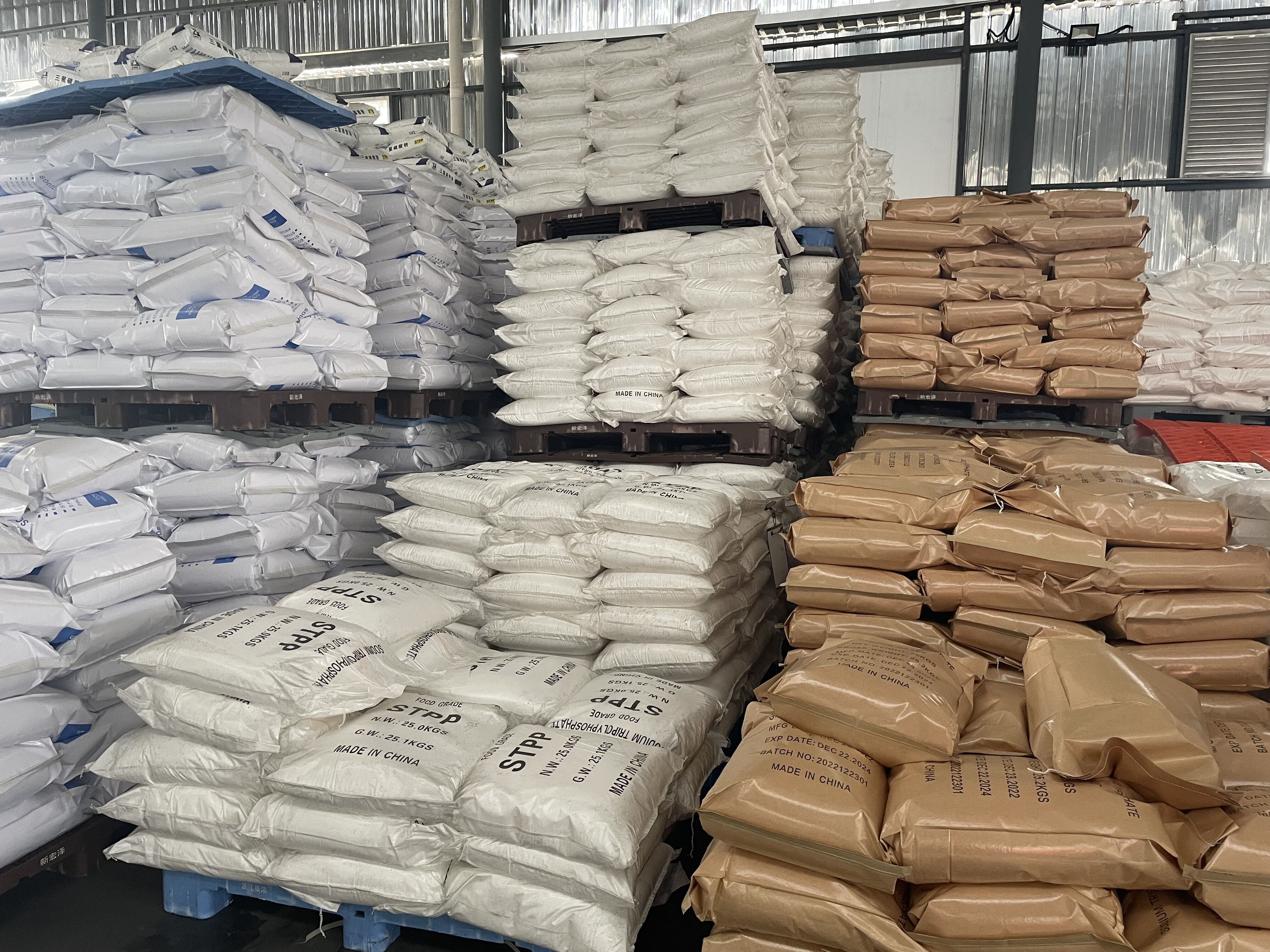
As a new type of inorganic chemical product with chelating, emulsifying, dispersing and buffering functions, Sodium Tripolyphosphate (STPP), with the chemical formula Na₅P₃O₁₀, has become an indispensable core auxiliary in many fields such as detergents, food processing, water treatment and chemical production, relying on its stable chemical properties, wide adaptability and excellent application effects. With its efficient and reliable characteristics, it injects strong motivation into the quality and efficiency improvement of various industries.
We have always adhered to the concept of "quality first, innovation-driven". Relying on advanced production technology and strict quality control system, we have created high-purity and high-performance STPP products, which take into account practicality and environmental protection. They not only meet the core needs of industrial production, but also conform to the industry trend of green development in the new era, helping partners achieve product upgrading and value improvement.
Core Product Characteristics: Multifunctional Synergy, Outstanding Advantages
As a water-soluble linear polyphosphate, STPP is a white powder or granular solid, odorless and tasteless, easily soluble in water, with a weakly alkaline aqueous solution. It has unique chemical properties and application advantages, and its core characteristics can be summarized into four aspects:
- Super Strong Chelating Ability: It can form stable soluble complexes with metal ions such as calcium, magnesium and iron in water, effectively softening water quality, preventing metal ion precipitation, avoiding scaling and stain reattachment. This characteristic makes it play a core role in the detergent and water treatment fields.
- Excellent Emulsifying and Dispersing Properties: It has good emulsifying effect on organic substances such as proteins and fats, can uniformly disperse solid particles in the system, improve product stability, and at the same time enhance the decontamination ability of detergents and improve the texture and taste of food.
- Stable Buffering Performance: It can maintain the stability of the system's pH value in a wide pH range, adjust the product's pH value, and provide a stable reaction environment for the production process, especially suitable for industries with high requirements on pH value such as food processing, printing and dyeing, and chemical industry.
- Safe and Reliable, Wide Adaptability: As a generally recognized as safe (GRAS) food additive (E451) and industrial auxiliary, it is low-toxic and non-corrosive. According to the needs of different industries, it can customize products with different purity and crystal forms (Type I and Type II) to adapt to various production scenarios.
Multi-field Applications: Empowering Industries, Full Coverage
With its multifunctional synergy advantages, the application scenarios of STPP have covered many core industries, from daily consumer goods production to industrial manufacturing, from food processing to water treatment. Each application scenario highlights its unique value and becomes an important support for promoting the high-quality development of the industry.
Detergent and Daily Chemical Industry
As the core auxiliary in the detergent industry, STPP is a key component of synthetic detergents, soaps, dishwashing liquids and other products, accounting for 10%-50% of the detergent formula. It can effectively soften hard water, chelate the hardness-causing metal ions in water, avoid the formation of insoluble soap scum, and improve decontamination efficiency; at the same time, it can disperse dirt, prevent its re-deposition, maintain the cleanliness of clothes and tableware, and also prevent detergents from absorbing moisture and caking, keeping products in dry granular form. In addition, it can be used as a soap synergist to prevent the precipitation and frosting of soap oil, adjust the pH value of soap liquid, and improve the user experience of daily chemical products.
Food Industry
In the field of food processing, STPP is widely used as a water retention agent, quality improver, pH regulator and metal chelating agent with remarkable effects. In the processing of meat products (ham, sausage, bacon, etc.), it can combine with muscle protein, open the protein structure, improve water retention, reduce cooking loss, make the meat more tender and elastic, and at the same time inhibit lipid oxidation and extend the shelf life; in the processing of aquatic products (shrimp, fish fillets, etc.), it can prevent juice loss during freezing and thawing, inhibit the generation of fishy odor, and maintain product freshness; in dairy products, beverages and flour products, it can stabilize the system, prevent precipitation and stratification, improve product texture and taste, and also remove heavy metal ions to ensure food safety.
Water Treatment Industry
STPP plays an important role in industrial water and drinking water treatment. As a water softener, it can inhibit calcium salt precipitation, prevent scaling of boilers, cooling systems and water supply pipelines, and extend the service life of equipment; at the same time, it can be used as a corrosion inhibitor, forming colloidal complexes with divalent cations such as calcium ions, forming a protective film on the metal surface, reducing corrosion, especially suitable for corrosion control of cast iron water supply pipelines; in addition, it can stabilize and disperse calcium and iron ions in water, prevent the "red water" phenomenon, and improve water quality.
Other Industrial Fields
In addition to the above fields, STPP is also widely used in chemical industry, printing and dyeing, papermaking, ceramics, drilling and other industries. In the printing and dyeing industry, as a dyeing auxiliary, it can stabilize the pH value of the dye liquor and improve the dyeing uniformity and color fastness; in the papermaking industry, it is used as an anti-oil agent to improve paper performance; in the ceramic industry, as a deflocculant, it reduces the viscosity of the slurry, improves fluidity, and optimizes the forming effect of ceramic green bodies; in the drilling field, as a mud dispersant, it stabilizes the performance of drilling fluid and ensures the smooth progress of drilling operations; at the same time, it can also be used as a flame retardant and crosslinking agent in the production of coatings, plastics and other products.