

Sinoright Blog
Citric Acid Monohydrate vs Anhydrous
Product Grade Characteristics & Core Differences
Monohydrate Citric Acid
Monohydrate citric acid contains crystalline water with stable physical properties. It features low hygroscopicity, excellent anti-caking performance and low storage threshold, suitable for conventional warehouse environment. It delivers stable acid adjustment, chelation and color protection effects in liquid systems, with high cost performance. It is the preferred grade for liquid food and general industrial production.Anhydrous Citric Acid
Anhydrous citric acid is free of crystalline water, with higher effective acid content and purer texture. Its hygroscopicity is significantly stronger than monohydrate type, requiring strict sealing and moisture-proof storage. It is specially developed for moisture-sensitive formulas and all-dry powder production systems, effectively solving powder deterioration and caking problems caused by water introduction.Full Mesh Size Parameters & Particle Performance Features
Our factory supports complete customized particle sizes of citric acid, covering all common industrial and food-grade fineness requirements. All specifications feature uniform particle size, low fine powder rate and stable dissolution performance, with no mixed particles or impurities.5-8mesh / 8-12mesh (Super Coarse Granular)
Large and uniform particles with extremely slow dissolution speed. It has the strongest anti-caking ability and long-term storage stability. It is suitable for products requiring slow acid release and delayed taste presentation, and not applicable for rapid dissolving liquid production lines.10-20mesh (Medium-Coarse Granular)
With balanced particle fineness and good fluidity, it dissolves steadily without rapid acid volatilization. It has strong universality in solid food processing and industrial compounding, with extremely low production matching risk.20-40mesh (Medium Granular)
Moderate dissolution speed, uniform dispersion after dissolution and no visible residue. It is a versatile particle size for solid finished products and daily chemical formulas, balancing production efficiency and finished product effect.40-80mesh (Fine Granular)
The finest conventional specification in our factory, achieving rapid and complete dissolution. No particle residue or floating powder appears after dissolving, which meets the high-standard fineness requirements of beverages, fine liquid formulas and high-precision production.Industry Matching Solution: Grade + Mesh Size Accurate Combination
In actual industrial production, single-grade selection is not enough. Only by matching the correct mesh particle size can we achieve stable finished product quality. Different industries have strict matching standards for citric acid water content and particle fineness.Food & Beverage Industry Matching
Liquid drinks, fruit juice, functional beverages: Monohydrate + 40-80meshFine particles dissolve instantly and evenly, ensuring transparent liquid body, uniform sour taste and no precipitation residue, meeting the production standards of bottled beverages and export food.
Candy, preserved fruit, baked snacks: Monohydrate + 10-20mesh / 20-40mesh
Stable acid release speed during high-temperature processing avoids local over-sour or tasteless problems, ensuring consistent batch taste.
Solid beverage powder, food premix powder: Anhydrous + 20-40mesh / 40-80mesh
Zero crystalline water prevents powder moisture absorption and agglomeration, effectively extending product shelf life and stabilizing powder activity.
Slow-release confectionery products: Anhydrous/Monohydrate + 5-8mesh / 8-12mesh
Super coarse particles realize continuous slow acid release, forming long-lasting taste effect and improving product texture.
Daily Chemical & Cleaning Industry Matching
Liquid detergent, industrial descaling agent, water-based formula: Monohydrate 40-80meshFast dissolution improves pH adjustment efficiency, uniform chelating and descaling performance, suitable for continuous large-scale production.
Solid cleaning powder, detergent compound additives: Monohydrate 10-40mesh
Cost-effective with stable performance, fully meeting the formula needs of civil and industrial cleaning materials.
Industrial Water Treatment & Fine Chemical Industry
Water quality pH adjustment, metal surface cleaning, industrial chelation: Monohydrate 20-40meshStable chemical properties, strong adaptability, suitable for long-term and large-volume industrial auxiliary use.
Fine chemical synthesis, moisture-sensitive reaction formulas: Anhydrous 40-80mesh
No water molecule interference, ensuring stable chemical reaction process and qualified finished product yield rate.
Professional Replacement Specification & Usage Taboos
Core Rule: Never replace anhydrous citric acid with monohydrate type in all-dry formulas.The crystalline water contained in monohydrate citric acid will destroy the anhydrous system of powder products, causing irreversible problems such as material agglomeration, mildew and shortened shelf life. Anhydrous citric acid can be used in liquid production, but its high cost is not suitable for mass general production. In addition, mismatched mesh size will also cause quality risks: coarse particles lead to liquid precipitation, while ultra-coarse particles used in fast-forming products cause uneven taste.
Quick Selection Guide for Industrial Buyers
Monohydrate Citric Acid 5-8/8-12mesh: Slow-release candy, long-cycle thermally processed foodMonohydrate Citric Acid 10-20/20-40mesh: Preserved fruit, baked food, industrial cleaning powder materials
Monohydrate Citric Acid 40-80mesh: All kinds of liquid beverages, liquid food, water-based daily chemicals
Anhydrous Citric Acid 5-8/8-12mesh: Special slow-release anhydrous food formulas
Anhydrous Citric Acid 10-20/20-40mesh: Food premix powder, solid additive preparation
Anhydrous Citric Acid 40-80mesh: High-end solid drinks, fine chemical synthesis processing
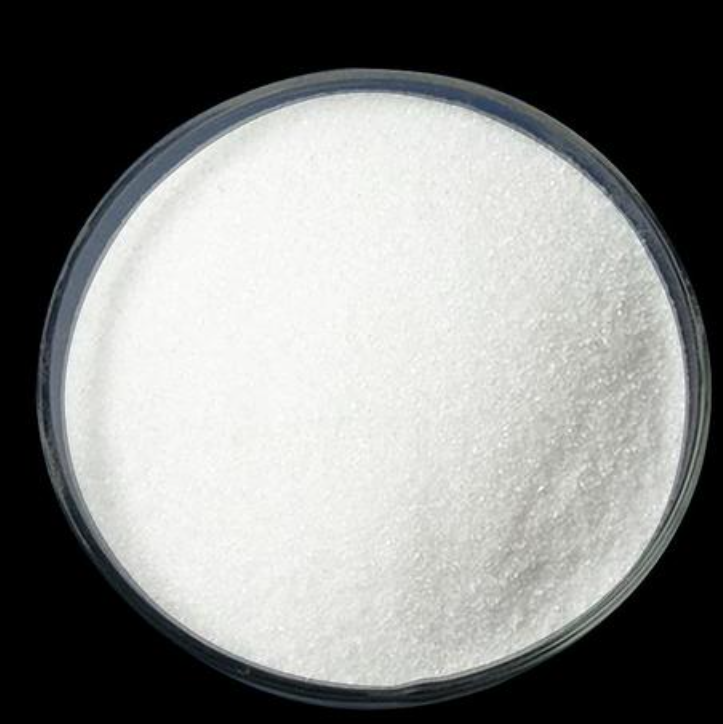
Common Purchasing & Production Questions
Q1: Why does citric acid cause precipitation in beverage production?The main reason is unreasonable mesh selection. Excessively coarse particles cannot be completely dissolved in liquid. All liquid formula production must adopt 40-80mesh fine particle citric acid.
Q2: Is anhydrous citric acid necessary for beverage production?
Not necessary. Conventional liquid beverages have no strict restriction on trace water. Monohydrate citric acid can fully meet the standard with lower cost and higher practicability.
Q3: What are the consequences of misusing monohydrate citric acid in powder food?
Crystalline water will cause powder moisture absorption, agglomeration and mold breeding, resulting in unqualified finished products and batch economic losses.
Q4: What are the application advantages of coarse mesh citric acid?
Low powder content, not easy to absorb moisture and agglomerate, stable storage, suitable for process formulas that require slow acid release and long-term taste maintenance.