

Sinoright Blog
Citric Acid Specifications and Applications
Citric acid is widely traded as an organic acid and processing ingredient for food, beverage, pharmaceutical, detergent, water treatment, chemical processing, and other industrial applications. For bulk buyers, selecting citric acid is not only about price. Product form, grade, mesh size, moisture condition, solubility requirements, and the intended production process should all be considered before purchasing.
We supply citric acid products according to customer application requirements and can provide purchasing suggestions for different industries and processing conditions.
Citric Acid Types and Grades
Citric Acid Anhydrous
Citric acid anhydrous contains no water of crystallization and is commonly selected where a lower moisture contribution is required in the formulation.
Industrial buyers may consider anhydrous citric acid for applications where:
- Moisture control is important
- Dry blending is involved
- Product formulation requires an anhydrous raw material
- Storage and processing conditions favor a dry crystalline product
The final selection should still be based on the customer's formulation requirements and applicable product standards.
Citric Acid Monohydrate
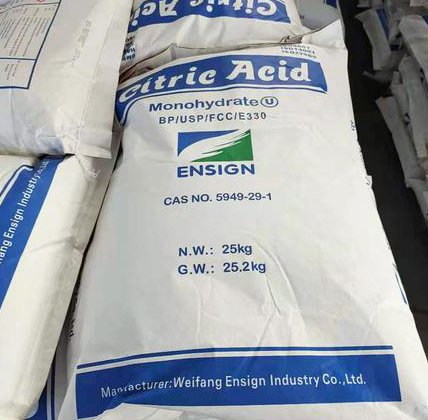
Citric acid monohydrate contains one molecule of water of crystallization and is another widely used commercial form.
It is commonly considered for applications involving:
- Food and beverage processing
- General chemical processing
- Cleaning and detergent formulations
- Industrial formulations requiring citric acid in crystalline form
Anhydrous and monohydrate citric acid should not be treated as automatically interchangeable. Their molecular composition and water content differ, so buyers should confirm the required form before placing an order.
Citric Acid Mesh Size
Particle size is an important purchasing factor for crystalline citric acid. Different mesh ranges can affect handling, dissolution speed, dust generation, dry mixing behavior, and suitability for downstream processing.
The commonly used mesh ranges include:
- 5–8 mesh
- 8–12 mesh
- 10–20 mesh
- 20–40 mesh
- 40–80 mesh
Coarse Citric Acid: 5–8 Mesh and 8–12 Mesh
Coarser material is generally more suitable where larger crystals are preferred for handling, controlled dissolution, or specific processing requirements.
Before purchasing, buyers should confirm:
- Whether the process requires visible crystals
- Required dissolution behavior
- Equipment feeding conditions
- Acceptable particle size distribution
Medium Particle Size: 10–20 Mesh and 20–40 Mesh
Medium particle ranges are commonly considered for general industrial processing and dry blending where a balance between handling and dissolution is required.
The appropriate range depends on the actual formulation, mixing equipment, production speed, and final product requirements.
Fine Citric Acid: 40–80 Mesh
Finer citric acid generally provides a larger surface area and may dissolve or disperse more quickly under suitable processing conditions.
However, finer material can also require greater attention to:
- Dust during handling
- Storage conditions
- Powder transfer systems
- Blending uniformity
For this reason, buyers should select fine mesh products according to actual production equipment rather than simply choosing the finest available particle size.
Citric Acid Applications by Industry
Food and Beverage Processing
Citric acid is widely used in food and beverage processing as an acidulant and acidity regulator. Depending on the product and applicable regulations, buyers may need to consider the appropriate grade, product form, purity requirements, particle size, and documentation.
For food processing applications, purchasing specifications should be based on the relevant market and regulatory requirements rather than relying only on a general product name.
Detergent and Cleaning Products
Citric acid can be used in cleaning and detergent formulations for acidity adjustment and formulation purposes.
For this sector, buyers may pay particular attention to:
- Product form
- Solubility requirements
- Particle size
- Compatibility with other formulation materials
- Storage and handling conditions
The most suitable specification depends on whether the product is used in powder, tablet, granule, or liquid processing.
Chemical Processing
Citric acid is also used as a chemical raw material in various industrial formulations and processing operations.
Chemical industry buyers usually focus on:
- Required specification
- Product form
- Moisture-related requirements
- Particle size
- Batch consistency
- Packaging and logistics arrangements
A purchasing specification should be matched with the actual production process instead of using one standard requirement for all chemical applications.
Water Treatment and Industrial Cleaning
Citric acid may be used in certain industrial cleaning and processing applications where an organic acid is required.
Before selection, buyers should evaluate:
- Process conditions
- Required concentration
- Compatibility with the system
- Material requirements
- Applicable operating procedures
The final suitability should be determined according to the specific industrial process.
How to Choose Citric Acid Specification
Confirm the Required Form
The first step is to confirm whether citric acid anhydrous or citric acid monohydrate is required. This should be determined by the formulation and technical specification.
Select the Appropriate Mesh Size
For crystalline citric acid, buyers should select from available mesh ranges according to processing requirements:
- Coarser mesh for applications requiring larger crystals
- Medium mesh for general processing and blending
- Fine mesh where faster dissolution or finer particle distribution is required
The mesh size should be confirmed as part of the purchase specification.
Confirm the Required Grade
Different industries may have different requirements for product standards, purity, documentation, and regulatory compliance.
Buyers should clearly identify the intended application before requesting a quotation. This helps avoid purchasing a specification that is unsuitable for the final market or production process.
Check Packaging and Storage Requirements
Citric acid should be kept under suitable dry storage conditions and protected from unnecessary moisture exposure. Packaging requirements may vary according to shipment quantity, destination, and customer handling procedures.
Bulk buyers should also consider:
- Container loading requirements
- Pallet requirements
- Bag specifications
- Labeling requirements
- Shipment documentation
Citric Acid Purchasing Considerations
Citric Acid Price Factors
Citric acid prices can be affected by market supply, raw material conditions, product form, grade, particle size, packaging, order quantity, and international freight conditions.
For industrial procurement, comparing only the price per metric ton may not be sufficient. Buyers should compare the complete specification and commercial terms.
Citric Acid Supplier Selection
When sourcing citric acid for industrial use, buyers should confirm:
- Product specification
- Citric acid form
- Mesh size
- Required grade
- Packaging
- Quantity per shipment
- Documentation requirements
- Destination market requirements
Clear specifications before ordering can reduce unnecessary changes and communication delays.
Bulk Citric Acid Supply
We work with industrial buyers requiring citric acid for different processing applications and can provide product selection suggestions based on the intended use, required form, grade, and mesh size.
For quotation and purchasing discussions, buyers can provide:
- Citric acid anhydrous or monohydrate requirement
- Intended industry or application
- Required mesh size
- Required grade or specification
- Purchase quantity
- Destination port or country
- Packaging requirements
Providing these details at the beginning helps us recommend a more suitable commercial specification.