

Sinoright Blog
Which Grade Sodium Polyacrylate Fits Your Production?
In industrial procurement and formulation, the grade selection and molecular weight matching of sodium polyacrylate directly determine the dissolution efficiency, thickening stability and system suitability of the finished product.
Most production lines will encounter practical pain points: food contact safety is not up to standard due to wrong grade selection, use effect is unstable due to molecular weight mismatch, and dissolution and caking are caused by improper operation.
This paper reviews the product characteristics, industry adaptation schemes and purchase taboos of full-size sodium polyacrylate, and provides accurate raw material selection schemes for the fields of food processing, daily chemical, water treatment and industrial manufacturing.
Most production lines will encounter practical pain points: food contact safety is not up to standard due to wrong grade selection, use effect is unstable due to molecular weight mismatch, and dissolution and caking are caused by improper operation.
This paper reviews the product characteristics, industry adaptation schemes and purchase taboos of full-size sodium polyacrylate, and provides accurate raw material selection schemes for the fields of food processing, daily chemical, water treatment and industrial manufacturing.
Sodium Polyacrylate (CAS 9003-04-7) is a kind of water-soluble polymer electrolyte, which is widely used as thickener, water retaining agent, dispersant and flocculant in industrial systems. The products are divided into food grade and industrial grade according to safety compliance, and are further divided into low, medium and high molecular weight specifications according to performance. The combination of different grades and molecular weights corresponds to the exclusive production scenario. Reasonable matching can effectively avoid the common problems of caking, unstable effect and high cost.
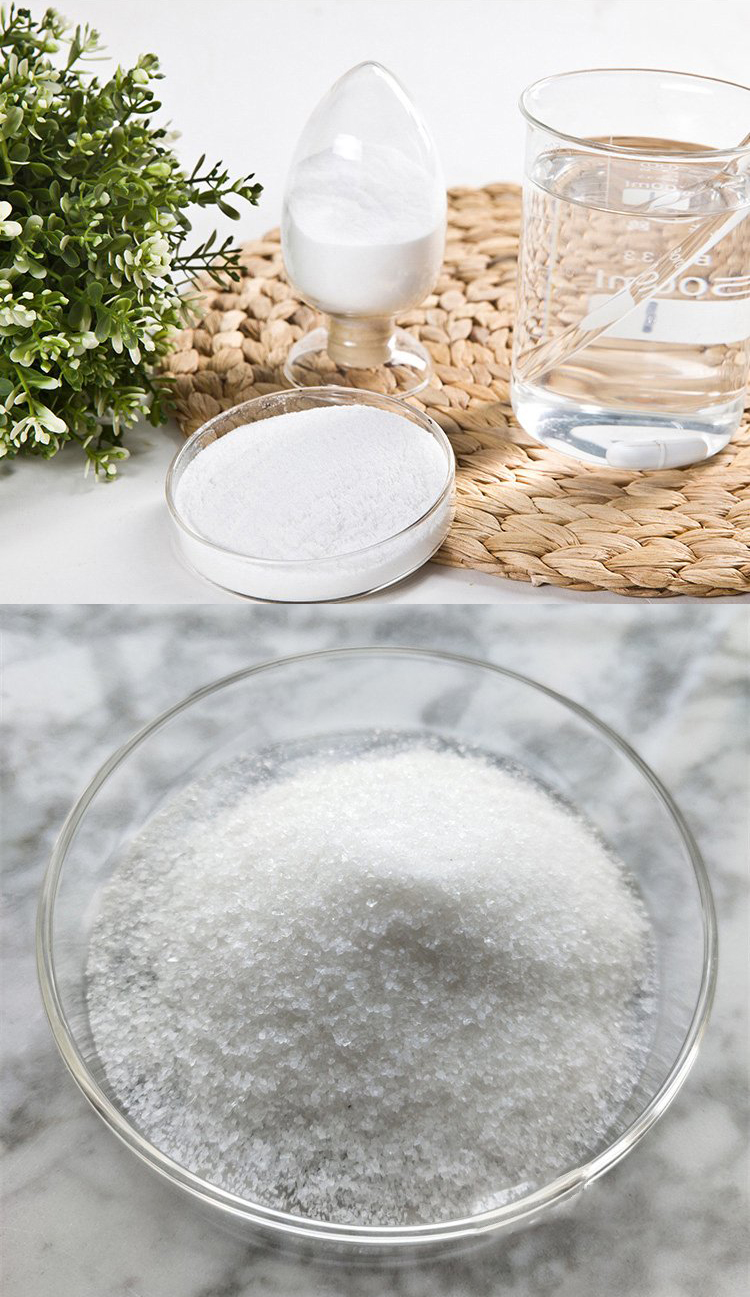
Grade Core Characteristics & Key Differences
Food Grade Sodium Polyacrylate
According to the standard production of food additives, the residual impurities are low, the molecular weight distribution is stable, and the control of heavy metals is strict. It can be directly used in food contact processing scenarios, and play the roles of water retention, thickening, texture improvement, anti-aging and so on in the food system. It has good solubility and stable performance, and meets the import detection standards of most countries and regions.
Industrial Grade Sodium Polyacrylate
According to the application requirements, it is divided into low, medium and high molecular weight specifications. Low molecular weight products are mainly used as dispersants, scale inhibitors and anti sedimentation agents; Medium and high molecular weight products are used for thickening, flocculation, water absorption and other scenarios. The impurity index does not meet the food safety standards, and is only applicable to non edible industrial scenes, with outstanding cost performance.
Molecular Weight Classification & Performance Characteristics
We supply a full range of molecular weight specifications, each with targeted application advantages, to meet the needs of different production processes.
Low Molecular Weight
Excellent dispersion performance, mainly used as dispersant, scale inhibitor and anti sedimentation agent, which can effectively disperse the solid particles in the system, inhibit the agglomeration and sedimentation of particles, and maintain the uniformity and stability of the system.
Medium Molecular Weight
The thickening and dispersion properties are balanced, and the film-forming property is good. It is widely used in conventional thickening, sizing and surface treatment scenarios, with stable performance and strong process adaptability.
High Molecular Weight
It has outstanding thickening, water absorption and flocculation effects, which can rapidly improve the viscosity of the system, form large particles of alum in wastewater, and has significant water retention and thickening effects in food and building systems.
Industry Adaptation Scheme: Precise Matching of Grade & Molecular Weight
In actual production, it is far from enough to select the right grade. Molecular weight directly determines the functional effect and use cost. Different industries have clear adaptation requirements for product safety and functional performance.
Food Processing Industry (Food Grade Only)
Liquid sauce, beverage, soup: food grade medium molecular weight
It dissolves quickly and evenly, has no sense of particles, tastes delicate, and has stable thickening effect. It is suitable for liquid food systems requiring permeability and homogeneity.
Rice flour products, meat products, quick-frozen food: food grade medium high molecular weight
Moderate swelling speed, matching the processing cycle of kneading, pickling and heating, effectively improving water retention and taste, and reducing cooking loss.
Powder seasoning and compound food additive: food grade medium molecular weight
It has good fluidity, is not easy to absorb moisture and agglomerate during storage, is evenly mixed with other powder raw materials, and the batch quality is stable.
Daily Chemical Industry
Detergent, detergent and cleaning products: industrial grade/food grade medium molecular weight
It has the advantages of rapid dissolution, stable thickening, good compatibility with surfactant system, no stratification and precipitation.
Skin care products and facial masks: food grade medium molecular weight
Low irritation, smooth skin feeling, good moisturizing and thickening effect, meeting the safety requirements of skin contact products.
Industrial Water Treatment & Chemical Additives (Industrial Grade Only)
Flocculation and sedimentation of sewage: industrial high molecular weight
It has stable dissolution, good flocculation effect and fast alum formation speed, which is suitable for large-scale industrial wastewater and municipal water treatment projects.
Dispersion of coatings and pigments: industrial low molecular weight
Excellent dispersion performance, effectively prevent pigment sedimentation, and improve coating uniformity and storage stability.
Building grouting and drilling fluid thickening: industrial high molecular weight
It has the advantages of long thickening time, good shear resistance and long construction period.
Textile & Paper Industry (Industrial Grade)
Textile sizing and fabric finishing: industrial grade medium molecular weight
It has good film forming property, improves fiber strength and sizing uniformity, and reduces end breakage rate.
Paper strengthening agent and retention aid: industrial grade medium high molecular weight
Improve the dry strength of paper and filler retention rate, reduce raw material consumption.
Grade Replacement Specification & Use Taboo
Core guideline: industrial grade substitution for food grade is strictly prohibited in food production.
Industrial grade products do not meet the food safety standards in terms of impurities, heavy metals and other indicators, which will lead to unqualified food testing and compliance risks. In addition, products with different molecular weights cannot be replaced at will: low molecular weight products cannot achieve the expected thickening effect, and high molecular weight products used as dispersants will cause the viscosity of the system to soar.
Attention should be paid to the operation mode when using: a large number of rapid feeding is easy to cause agglomeration on the surface and insufficient dissolution. It is recommended to disperse the feeding slowly to ensure sufficient dissolution and stable effect.
Quick Selection Table for Industrial Procurement
Food grade low medium molecular weight: Beverage sauce, powder seasoning
Food grade medium high molecular weight: Rice flour products, meat products, quick-frozen food, skin care products
Industrial low molecular weight: Paint pigment dispersion, scale inhibition and sedimentation resistance
Industrial grade medium molecular weight: Textile sizing, papermaking auxiliaries, daily chemical detergent
Industrial high molecular weight: Sewage flocculation, building grouting, drilling fluid thickening
FAQ on Procurement & Production
Question 1: What is the reason for agglomeration when dissolving sodium polyacrylate?
Most of them are caused by improper feeding methods. It is easy to form gel agglomerates on the surface when a large amount of water is quickly put into the water. It is recommended to disperse and feed slowly while stirring to ensure full dissolution.
Question 2: Is the thickening effect of food grade and industrial grade the same?
Under the same molecular weight specification, the basic thickening capacity is similar, and the difference lies in the impurity content and safety compliance. Lower food grade impurities and higher safety, which can be used in all scenes; Industrial grade is only applicable to non food systems.
Question 3: How to choose high molecular weight and low molecular weight products?
Select high molecular weight products for water retention, thickening and flocculation scenarios; Choose low molecular weight products for dispersion, anti sedimentation and scale inhibition scenarios. You can recommend matching specifications according to your specific use.
Question 4: What are the precautions for storage?
Sodium polyacrylate has certain hygroscopicity, so it needs to be sealed and stored dry to avoid moisture absorption and caking affecting the use effect.